
Commercial Irrigation Inspection Checklist for DFW
August heat has a way of exposing every weak zone on a North Texas property. Use this practical inspection sequence to find leaks, missed coverage, controller mistakes, and landscape stress before they become fall repair projects.
Published August 3, 2026 · Updated August 19, 2026 · Land Care Landscape Management
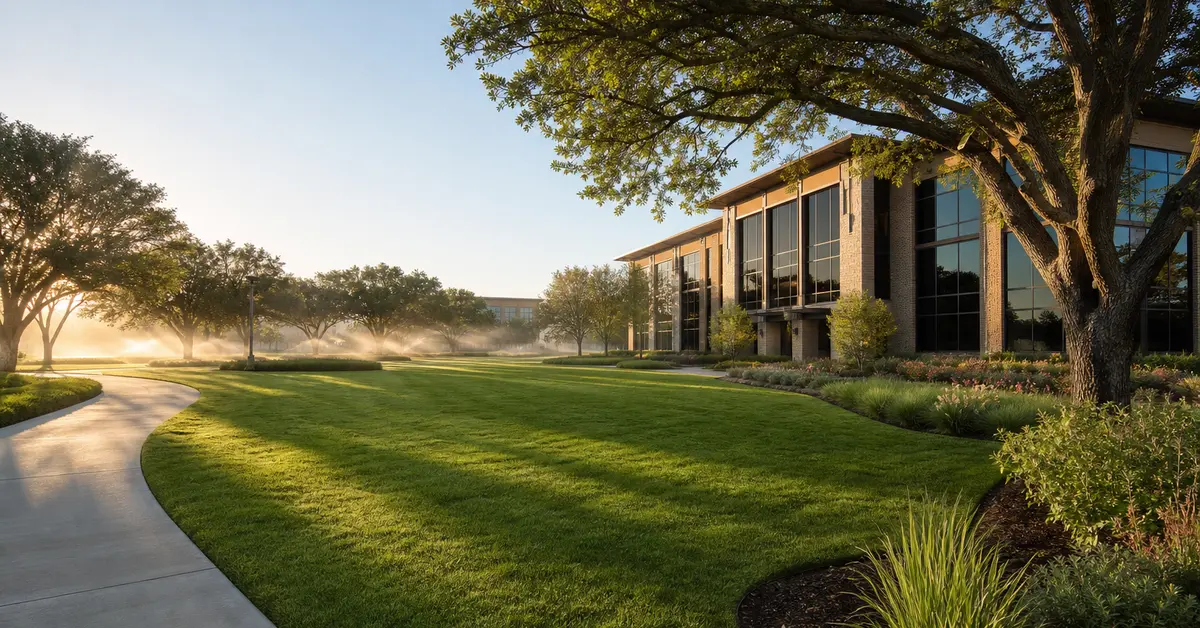
A green property can still have an irrigation problem. One zone may be running too long while another misses a strip of turf. A buried break can keep the soil wet without making a dramatic geyser. A controller can follow an old spring schedule long after North Texas conditions have changed. By the time the damage is obvious from the parking lot, the system may have been wasting water or stressing plants for weeks.
That is why a commercial irrigation inspection should be more than a quick controller check. It should connect what the system is doing with what the landscape is showing. Property managers need a repeatable way to review the equipment, coverage, schedule, and visible results, then turn those findings into an ordered plan.
Why late summer is the right time to inspect
August puts sustained demand on DFW landscapes. Turf, seasonal color, shrubs, and young trees do not all need water in the same way, yet older systems often treat them as if they do. Heat also makes uneven coverage easier to spot. A dry arc between heads, a stressed corner beside pavement, or a soggy bed around one valve becomes much clearer than it was during spring growth.
An inspection now gives a property team time to correct the system before fall schedules, color rotations, and cooler weather change the visual evidence. It also creates a baseline for the next budget cycle. Our commercial irrigation inspections start at the controller and work through the property zone by zone, because a schedule cannot be evaluated accurately if the hardware underneath it is not working as intended.
Separate inspection findings from repair decisions
Inspection answers three questions: What is happening? Where is it happening? What should happen next? Repair is the work that follows. Keeping those steps distinct helps a property manager review priorities, understand why a recommendation was made, and approve the right scope instead of authorizing a series of disconnected service calls.
Some findings need prompt irrigation maintenance and repair, such as a line break, failed valve, or head flooding a walkway. Others call for observation or scheduling changes. The useful deliverable is not a list of parts. It is a property map of risk, plant impact, water waste, and recommended action.
1. Begin with the controller and operating rules
Before turning on a zone, record how the controller is set today. Do not begin by changing settings. The existing program may explain the symptoms you see in the field, and changing it first erases part of the evidence.
- Confirm date and time. A power interruption or reset can shift watering into busy hours.
- List active programs. Look for overlapping start times or an old program that still runs.
- Record zone run times. Large differences should have a landscape reason, not be the result of years of small adjustments.
- Check watering days. Confirm the current schedule follows applicable city rules for that property.
- Review sensors and alerts. A rain, flow, or weather input only helps when it is connected, enabled, and responding.
- Note seasonal adjustment. The percentage should reflect current conditions rather than remain fixed all year.
For a multi-acre property or portfolio, capture screenshots or export settings when the controller supports it. Documentation gives the commercial grounds maintenance team and the property manager one shared reference after changes are approved.
2. Run every zone and watch the whole cycle
A zone that starts successfully can still fail two minutes later. Walk the full coverage area while it runs, then stay long enough to see whether water begins pooling or crossing onto pavement. Mark each problem by zone and location so a repair crew can return to the exact point.
- Watch the zone activate. Slow lift, chatter, or low pressure can point to a valve, supply, or leak issue.
- Inspect every head and nozzle. Look for broken bodies, clogged nozzles, tilted heads, blocked spray, and heads set below the surrounding grade.
- Follow the spray pattern. Water should serve the intended turf or bed, not windows, signs, parked vehicles, walks, or streets.
- Check for even coverage. Dry gaps and oversaturated overlaps can exist within the same zone.
- Look behind the obvious break. A damaged head may not be the only problem. Compare pressure and performance across the full zone.
- Watch what happens after shutoff. Continued flow, drainage from low heads, or a soggy valve area deserves a note.
Pay special attention around loading areas, drive entrances, sidewalks, utility work, and recent construction. Irrigation components often sit close to the places where vehicles, trenching, edging, and grade changes can disturb them.
3. Let the landscape confirm the system report
Equipment tells only half the story. Walk the property again with the water off. Compare the irrigation notes with turf color, plant condition, soil moisture, erosion, algae, and runoff marks. The landscape should confirm whether the issue is too little water, too much water, or something irrigation cannot solve by itself.
Brown turf does not automatically mean a zone needs more minutes. Coverage, compaction, heat reflected from pavement, insects, and disease can create similar symptoms. If the watering pattern looks correct but decline continues, the next step may be a turf assessment or lawn disease treatment evaluation, not a longer schedule.
The same rule applies to wet areas. A low spot or heavy North Texas clay can hold water even when the irrigation system is operating correctly. Our guide to DFW clay soil and drainage problems explains why recurring saturation needs diagnosis. In some areas, drainage and grading corrections may be more effective than repeatedly reducing irrigation around a site problem.
4. Build a report a property manager can use
A commercial inspection should produce more than a verbal recap. The report needs enough detail to support approvals, guide repairs, and create accountability at the next walk. At minimum, ask for:
- the inspection date, weather context, and controller reviewed;
- zone numbers tied to recognizable property locations;
- photos of significant leaks, overspray, pooling, and damaged components;
- current settings before any approved adjustments;
- findings grouped by urgent, near-term, and monitor;
- recommended repairs or schedule changes with the reason for each;
- a record of completed work and settings after corrections.
That paper trail is especially valuable when several people touch a property. Ownership can see what was found, the landscape contractor can assign work accurately, and the property manager can verify completion. It is one practical example of the documentation standard in our guide to what property managers should expect from a landscape partner.
How often should the checklist be used?
Complete a full inspection at least seasonally, then use quicker visual checks during active watering months. Add an inspection after freezes, construction, utility work, major landscape changes, or an unexplained shift in water use. Properties with multiple controllers, high public traffic, or large differences between turf and planting zones may need a tighter rhythm.
The goal is not to wait for a fixed date while a visible leak runs. It is to combine scheduled inspections with crews trained to report new issues between inspections. A broken head found during a routine property visit should enter the same documented workflow as a problem found during the formal review.
Turn the August walk into a fall action plan
A useful irrigation inspection leaves the property easier to manage. The urgent leaks are clear, the coverage gaps are mapped, controller changes have a reason, and larger landscape problems are separated from irrigation repairs. That is a stronger basis for approvals than reacting to the next brown patch or wet sidewalk.
Want a zone-by-zone review of your DFW commercial property? Request an irrigation inspection or call (972) 919-0054.
Commercial Irrigation Inspection FAQs
What is included in a commercial irrigation inspection?
A useful inspection checks controller settings, each zone, heads and nozzles, valves, visible leaks, pressure, coverage, runoff, sensors, and the landscape response. The property manager should receive documented findings and prioritized repair recommendations.
How often should a commercial irrigation system be inspected?
Inspect the full system at least seasonally and after construction, utility work, freezes, or unexplained changes in water use. During active watering months, regular visual checks help catch broken heads and runoff between formal inspections.
What are the signs of an irrigation leak on a commercial property?
Watch for soggy areas, water at curbs when a zone is off, heads that do not rise fully, sudden turf decline, erosion, bubbling soil, low pressure across a zone, or an unexpected change in water use.
Can an irrigation inspection reduce landscape water waste?
It can identify common causes of waste such as leaks, overspray, poor coverage, mismatched nozzles, excessive run times, and watering that ignores current conditions. Repairs and schedule corrections should be based on the documented findings.
Know What Every Zone Is Doing
We will inspect the system, document the findings, and give you a clear next step for the property.