
Irrigation Inspections, Controller to Head
Most irrigation systems run on autopilot for years — heads drift, nozzles clog, valves stick, programs outlive the landscapes they were set for. A controller-to-head inspection tells you what your system is actually doing, what it’s wasting, and what it’s quietly killing.
You Can’t Manage What Nobody Looks At
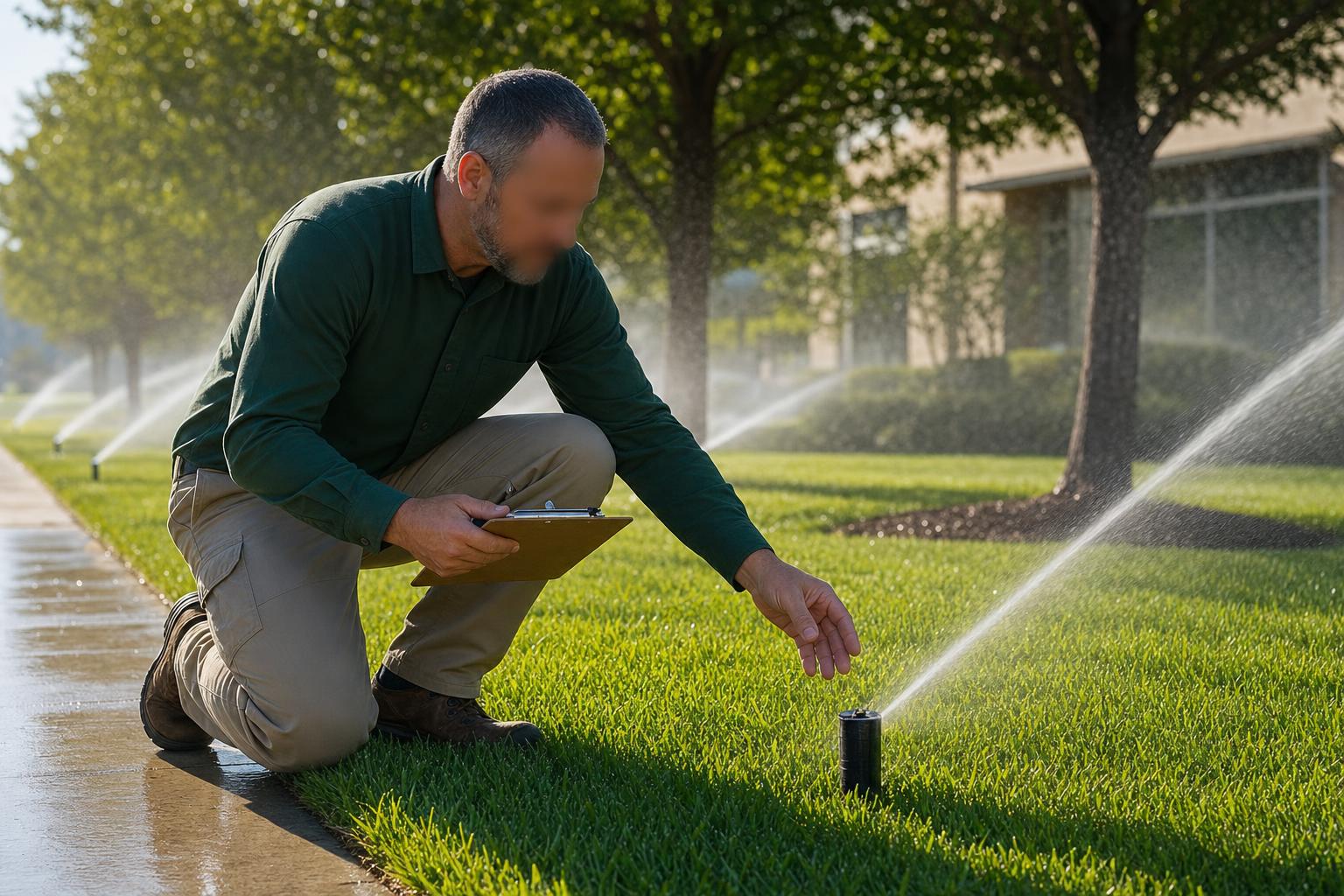
Our technicians run every zone and watch it work: controller programming against actual landscape need, valve function, head-by-head coverage and alignment, pressure behavior, and the wet-spot/dry-spot evidence that something underground is wrong. Smart-control systems get their data and settings reviewed, not just their hardware.
You get a clear report — what’s working, what’s marginal, what’s broken, and what each fix is worth in water and landscape protection. On commercial properties, seasonal inspections routinely pay for themselves in the first stuck valve they catch.
- Every zone run & watched, every head checked
- Controller programs audited to the landscape
- Pressure & coverage diagnostics
- Written findings with priorities
What a Real Inspection Covers
Not a walk-by — a system audit with the water running.
Programming checked against season, city rules, and what each zone waters.
Every valve fired, every zone observed running — problems show under pressure.
Coverage, alignment, clogs, tilts, and turf-grown-over heads corrected or flagged.
The soggy strips, misting heads, and pressure drops that mean money underground.
Findings ranked by urgency and water impact — repair decisions made easy.
Inspection Questions
How often should a commercial irrigation system be inspected?
Seasonally is the smart cadence in DFW — systems drift constantly as heads take mower hits, nozzles clog, and landscapes mature past their original coverage. At minimum, a thorough spring inspection before peak demand and a fall check as programs change.
What do inspections usually find?
The classics: controllers still running a program set three landscapes ago, heads watering pavement, a zone with a slow underground leak announcing itself as the greenest strip on the property, and pressure problems misting water into the wind. Almost every system over a few years old hides at least one.
Do you inspect smart controller systems?
Yes — smart-control and centrally managed systems are standard on the commercial properties we serve, and their flow data and settings are part of the audit. A smart controller with wrong settings just makes mistakes more efficiently.
Also on Your Property’s List?
Find Out What Your Water Bill Already Knows
One inspection, one honest report, and a system that finally answers to somebody. Schedule it.