
Retaining Walls That Hold — and Look Like They Should
A retaining wall has one non-negotiable job: staying put with tons of saturated North Texas clay leaning on it. We build walls that do that job for decades — engineered footings, real drainage behind the face, and stone or block that makes the grade change look intentional.
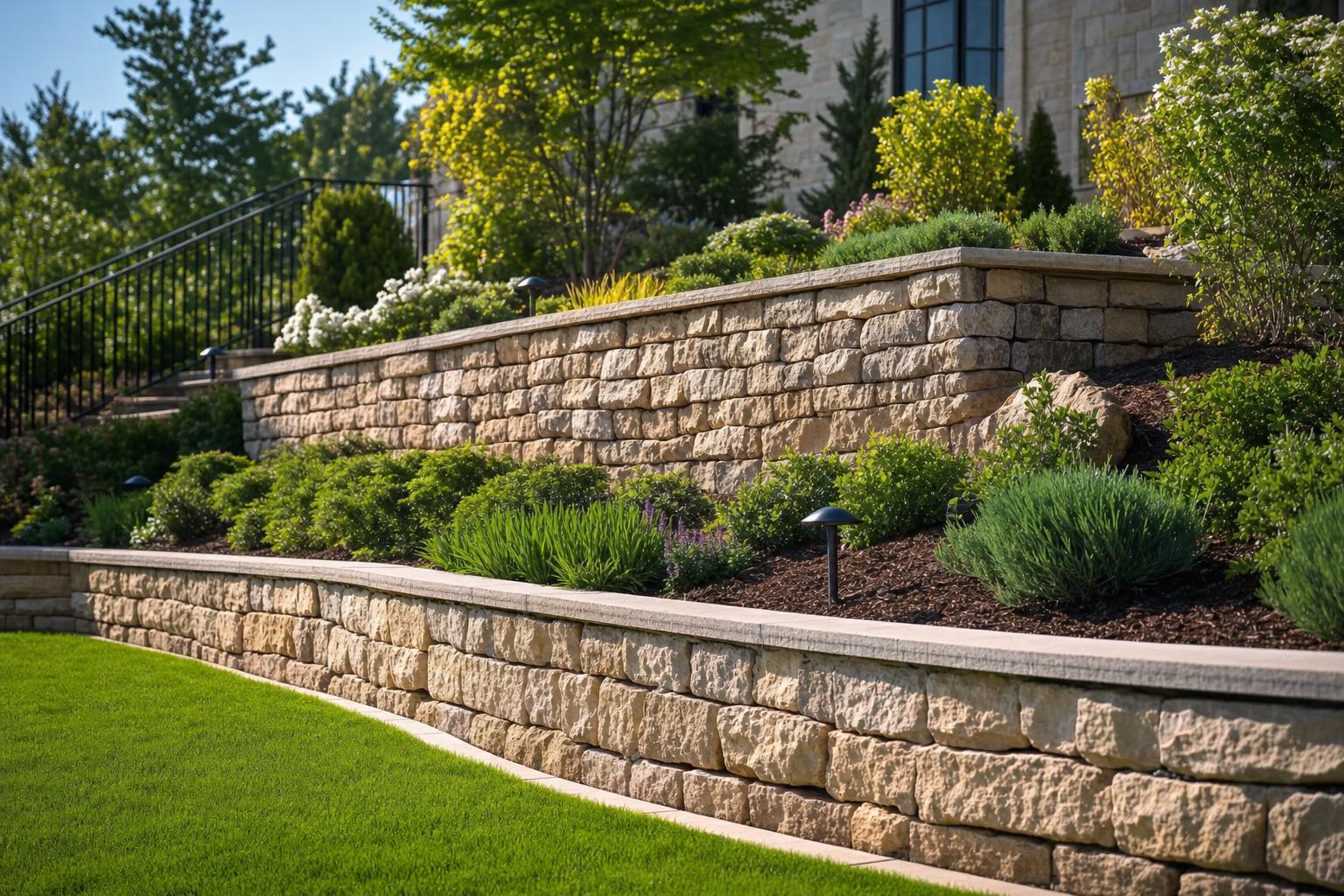
Walls Fail From Behind. Ours Don’t.
Nearly every leaning wall in DFW failed the same way: water built up behind it until hydrostatic pressure won. Our walls are built to drain — gravel backfill, drain pipe at the heel, weep paths that give water an exit — on compacted footings sized for the soil and the height.
Where height or surcharge demands it, we build geogrid-reinforced systems engineered for the load. And because a wall is also a design element, we finish in materials that fit the property — modular block, natural stone, boulder outcroppings — with caps, corners, and curves detailed clean.
- Drainage behind every face — always
- Compacted, sized footings
- Geogrid reinforcement where loads demand
- Stone, block & boulder finishes
Every Grade Problem Is a Space Opportunity
Walls that solve slopes — and give the flat ground back.
Engineered walls that hold grade changes and protect structures.
Stepped walls that turn steep slopes into planted, usable levels.
Stops soil loss on slopes that shed a little more of themselves every storm.
Lower walls that raise beds, define spaces, and dress transitions.
Leaning and bulging walls rebuilt with the drainage they never had.
Retaining Wall Questions
Why is my current retaining wall leaning?
Almost certainly water: no drainage behind the face, so every rain loads the wall with hydrostatic pressure clay never gives back easily. Rebuilding with gravel backfill and a drain at the heel is the fix — and the difference between our walls and the one that is leaning.
How tall can you build a retaining wall?
Low garden walls to significant engineered grade changes — taller walls bring geogrid reinforcement, engineering, and sometimes permitting into the design, all of which we handle. The honest answer for your slope comes from a site visit and the soil.
Can a retaining wall add usable space?
That is often the real reason to build one: a slope that grows nothing but erosion becomes a flat lawn, a terraced garden, a patio pad, or parking. You are not buying a wall — you are buying the level ground behind it.
Also on Your Property’s List?
Put the Slope to Work
Show us the grade that’s costing you space or shedding soil. We’ll design the wall that ends it.