
Hydroseeding for the Projects Where It Fits
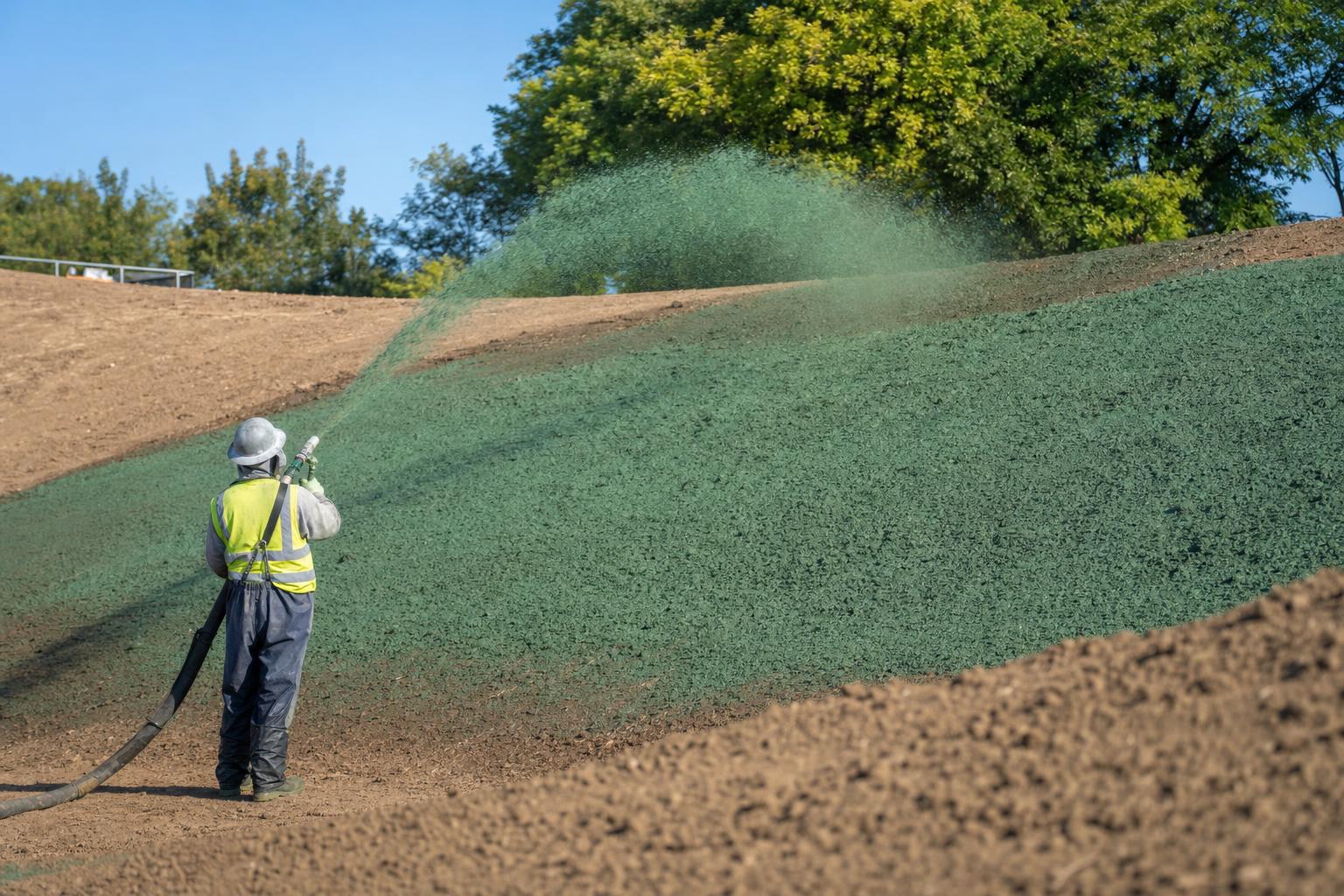
For big open acreage, slopes that erode faster than they grow, and budgets that can’t sod half a campus, hydroseeding covers ground no other method can touch per dollar — seed, mulch, fertilizer, and tackifier sprayed on as one moisture-holding blanket.
We’ll Tell You When to Hydroseed — and When Not To
Straight talk: for most DFW lawns, sod wins — instant coverage, fewer watering headaches under city restrictions, no germination gamble against a Texas summer. We say that as a company that offers both, so you get the answer that fits the project instead of the one being sold.
Where hydroseeding earns its place is scale and slope: multi-acre turf establishment, detention areas, embankments needing erosion control, and construction sites going green on a schedule. There, the slurry system — seed suspended in mulch with tackifier locking it to grade — outperforms everything at its price.
- Ideal for acreage, slopes & erosion control
- Seed blends matched to site & season
- Tackified slurry that holds on grade
- Honest sod-vs-seed guidance first
One Spray, Four Jobs
Everything turf establishment needs, applied in a single pass.
Grade finished and surface conditioned so slurry bonds and seed roots.
Bermuda and blends specced to sun, purpose, and establishment window.
Seed, mulch, fertilizer, and tackifier sprayed uniformly — even on slopes.
The mulch mat holds soil and moisture while roots take ownership.
Watering and first-mow schedules that carry spray to stand.
Hydroseeding Questions
Is hydroseeding cheaper than sod?
Per square foot, substantially — which is why it owns the large-area conversation. The trade is time and attention: weeks of germination and establishment watering versus sod’s instant lawn. On small high-visibility areas that math usually favors sod, and we will say so.
How long until hydroseed becomes a real lawn?
Germination shows in one to two weeks in season; mowable cover typically follows in four to six, with full density over the first growing season. Watering discipline in the first month decides most of it — we hand you the exact schedule.
Does hydroseeding work on slopes?
It is the slope solution. The tackifier glues the seed-and-mulch mat to grade so it survives rain that would wash broadcast seed to the bottom, and the established roots then hold the slope permanently. Detention basins, embankments, and berms are classic hydroseed work.
Also on Your Property’s List?
Big Ground to Cover? Let’s Talk Method.
Bring us the acreage and the deadline. We’ll spec hydroseed, sod, or the smart mix of both.