
Xeriscaping Built for Texas Summers
Watering restrictions aren’t going away — and neither is August. Xeriscaping replaces thirsty, high-maintenance zones with Texas-native and adapted plantings, stone, and smart design that look intentional year-round and drink a fraction of the water.
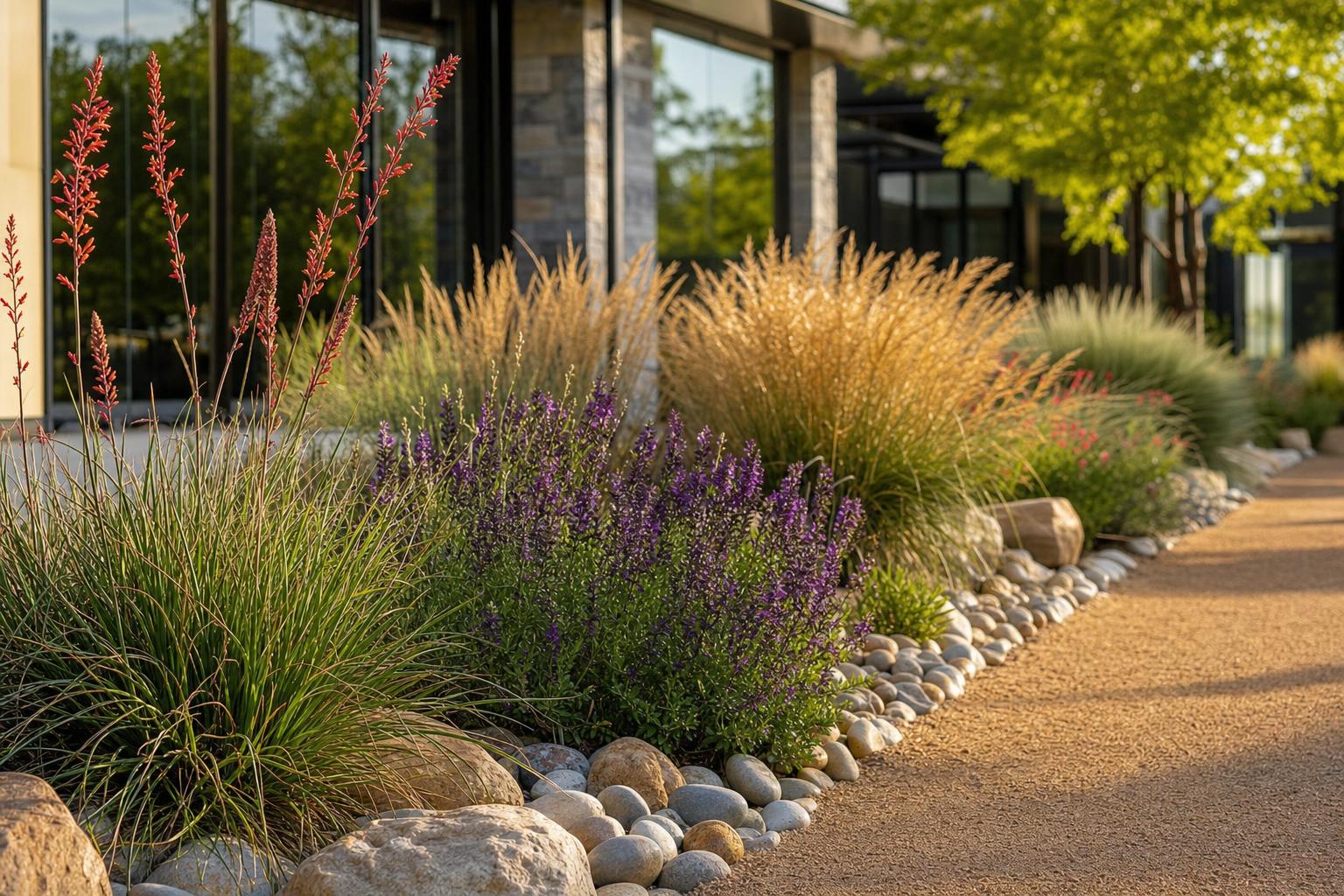
Xeriscape Doesn’t Mean Zero-Scape
Done badly, xeriscaping is a yard of gravel and regret. Done well, it’s layered texture — native grasses, flowering perennials, evergreen structure, and stone used with intent — that looks better in a drought than most landscapes look in May.
We design water-wise zones where they earn the most: sun-blasted strips, medians and parking islands, slopes irrigation struggles to cover. Then we group plants by water need, mulch to hold moisture, and tune irrigation down to match — savings you’ll see on the meter.
- Texas-native & adapted plant palettes
- Stone, decomposed granite & dry creek accents
- Hydrozoned planting — water grouped by need
- Lower water bills, lower maintenance
Designed Layers, Not Just Gravel
Every water-wise conversion is a full design — structure, color, and stone working together.
Grasses, perennials, and evergreens proven in DFW heat with minimal supplemental water.
Decomposed granite paths and river-stone accents that replace thirsty turf zones.
Drainage that doubles as design — moving storm water while looking like it belongs.
Plants grouped by water need so irrigation feeds each zone exactly what it uses.
Heads, drip, and schedules adjusted down to match the new landscape’s real demand.
Xeriscaping Questions
Will a xeriscape look bare or desert-like?
Not the way we design them. North Texas xeriscapes lean on layered native grasses, flowering perennials, and evergreen structure — closer to a Hill Country garden than a gravel lot. Stone is an accent, not the landscape.
How much water does xeriscaping actually save?
Converted zones typically need a fraction of the irrigation of conventional turf and annual beds — and some established native areas get by on rainfall alone in a normal year. On commercial water bills, the difference shows up fast.
Does xeriscaping work for commercial properties?
It is one of the smartest moves a DFW property can make: parking islands, frontage strips, and medians are brutal microclimates where natives outperform turf while cutting water and mowing costs. We will show you which zones convert best first.
Also on Your Property’s List?
Less Water. Less Mowing. More Landscape.
Pick the zone that fights you hardest every summer — we’ll show you what it looks like converted.