
Grub Control Before Turf Lifts Like Carpet
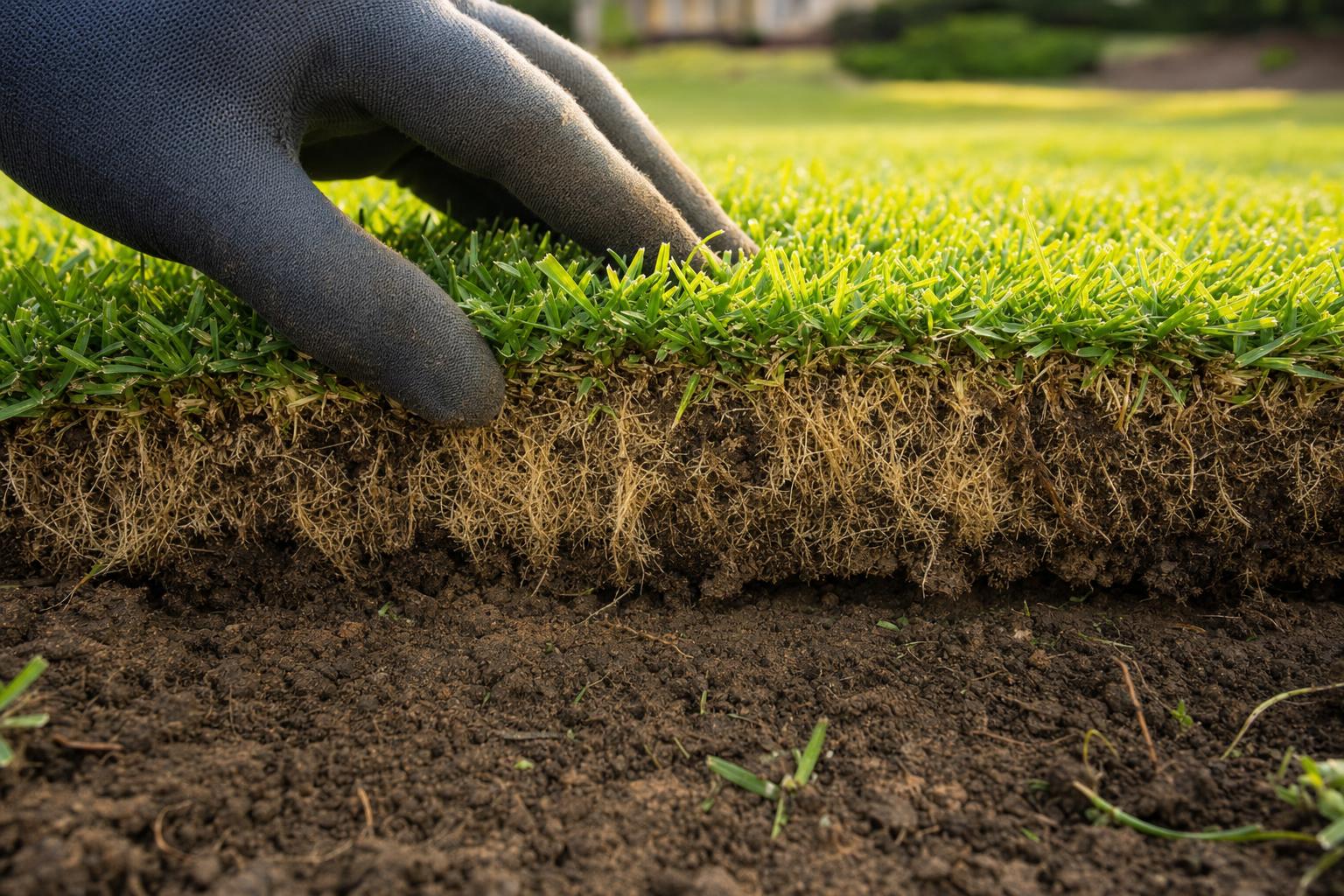
By the time grub damage shows — spongy turf, brown patches that peel up rootless, armadillos and birds tearing the lawn apart overnight — the feeding is done. Grub control works ahead of the damage, with treatment timed to when grubs are small, shallow, and stoppable.
June Beetles Lay It, August Pays for It
DFW’s white grubs are June beetle larvae: eggs laid in early summer, tiny grubs feeding on roots by midsummer, damage erupting in late summer heat when stressed turf can least afford root loss. Preventive treatment in that early window stops the cycle at its weakest point.
Already seeing damage? Curative treatment still works on active grubs, paired with recovery feeding and watering to regrow roots. And because a few grubs are normal in any lawn, we treat on thresholds and history — not fear — so you’re paying for protection that’s actually needed.
- Preventive treatment in the egg-hatch window
- Curative knockdown for active infestations
- Threshold-based — treatment when it’s warranted
- Recovery feeding after root damage
Protection, Knockdown and Recovery
The full arc — from prevention to regrown turf.
Season-long protection down before summer egg hatch — the high-percentage play.
Fast-acting control when active grubs are found feeding.
Tug tests and counts that separate grub damage from disease or drought.
Feeding and watering plans that rebuild roots after a feeding season.
When armadillos and birds are excavating, we treat the buffet they came for.
Grub Control Questions
How do I know grubs are what’s killing my lawn?
The tug test: grub-killed turf pulls up like loose carpet because the roots are gone, and you will often find the white C-shaped culprits in the top inches of soil. Sudden animal digging — armadillos, raccoons, flocks of birds — is the other giveaway; they are hunting the grubs.
When is the best time to treat for grubs?
Preventively, early-to-mid summer — product in place as eggs hatch, when grubs are small and near the surface. Curatively, as soon as damage is confirmed. Fall treatments fight bigger, deeper grubs and win less often, which is why the preventive window matters.
Do all lawns need annual grub treatment?
No — and we will not sell it that way. Lawns with damage history, heavy summer beetle activity, or high-value turf justify annual prevention; others do fine with monitoring. Our crews are on your property regularly, which is exactly what monitoring should look like.
Also on Your Property’s List?
Protect the Roots You Can’t See
One treatment in the right window beats a lawn renovation in the wrong one. Ask about grub prevention.