
Plant & Tree Fertilization That Reaches the Roots
Trees and shrubs in DFW grow in compacted, alkaline clay that locks up nutrients — then compete with turf for whatever’s left. Deep root fertilization injects nutrition directly into the root zone, where surface feeding never reaches and stressed plantings need it most.
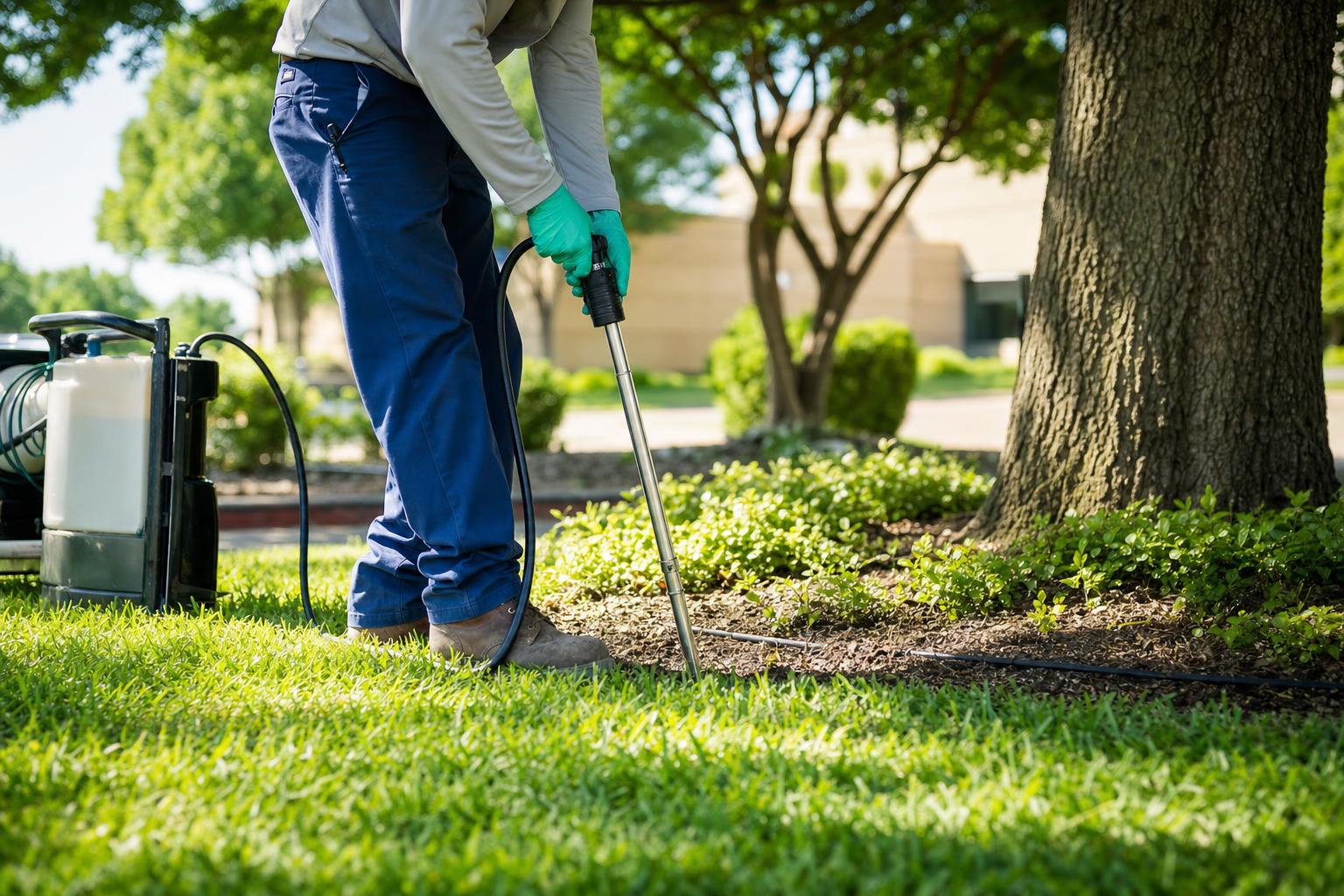
Your Trees Are Hungry. The Lawn Eats First.
Surface fertilizer feeds grass roots long before a tree sees it, and DFW’s high-pH soils chain up iron and micronutrients even when they’re present — the yellowing leaves on your oaks and the thin canopy on your magnolias are usually chemistry, not age.
Deep root feeding bypasses both problems: nutrients injected under pressure into the root zone in a grid around the tree, formulated for alkaline soil with the iron and micronutrients this region runs short on. Canopies answer with density, color, and growth — and stressed trees get their margin back.
- Pressure-injected into the root zone
- Formulated for alkaline DFW soils
- Iron & micronutrients included
- Aerates compacted soil as it feeds
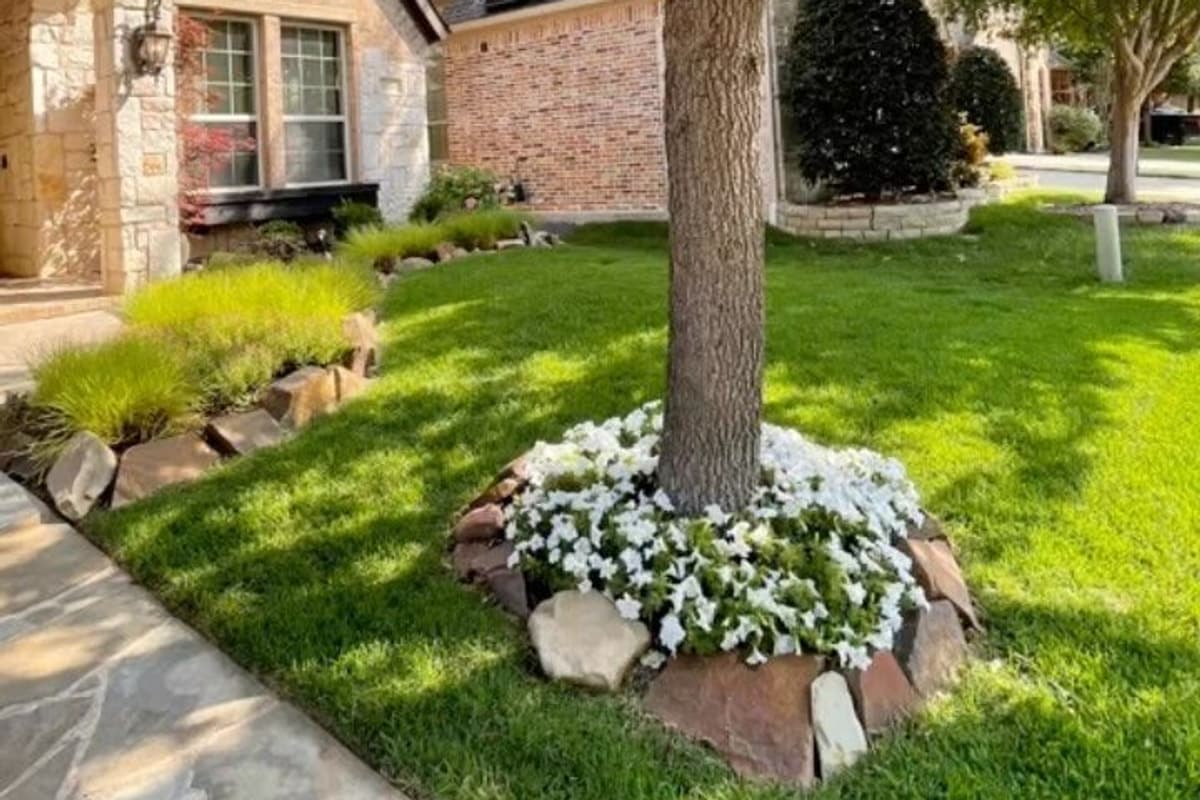
Feeding Programs for Everything Woody
From heritage oaks to the entry hedges — fed on their schedule.
Grid injections around the drip line — nutrition where roots actually are.
Foundation plantings and hedges fed for density and bloom.
The yellow-leaf fix for oaks, magnolias, and hollies on alkaline clay.
Construction, drought, and storm-stressed plantings nursed back with targeted nutrition.
Young trees and shrubs fed to root in fast and grow away strong.
Tree Fertilization Questions
How do I know if my trees need fertilization?
Read the canopy: pale or yellowing leaves with green veins, shorter new growth each year, thinning that lets more sky through, early fall color. In DFW those symptoms usually trace to nutrient lockup in alkaline soil — exactly what deep root feeding is built to fix.
When should trees be fed?
Spring and fall are the workhorses — feeding into root growth windows rather than summer stress. Recovery and chlorosis programs sometimes warrant additional timing; we set each tree’s schedule by condition, not by a route calendar.
Is deep root feeding worth it for mature trees?
A mature shade tree is one of the most valuable single assets on the property — replacement is decades away at any price. Keeping it dense, green, and defended against stress for the cost of a feeding program is some of the cheapest insurance in the landscape.
Also on Your Property’s List?
Feed the Assets That Take Decades to Replace
If the canopy is thinning or yellowing, the roots are asking. Let’s get them what they need.