
Commercial Tree Care: A Late-Summer DFW Checklist
Late summer exposes canopy, clearance, irrigation, and root-zone issues that were easy to miss in spring. A focused commercial property walk turns those observations into clear follow-up.
Published August 28, 2026 · Land Care Landscape Management
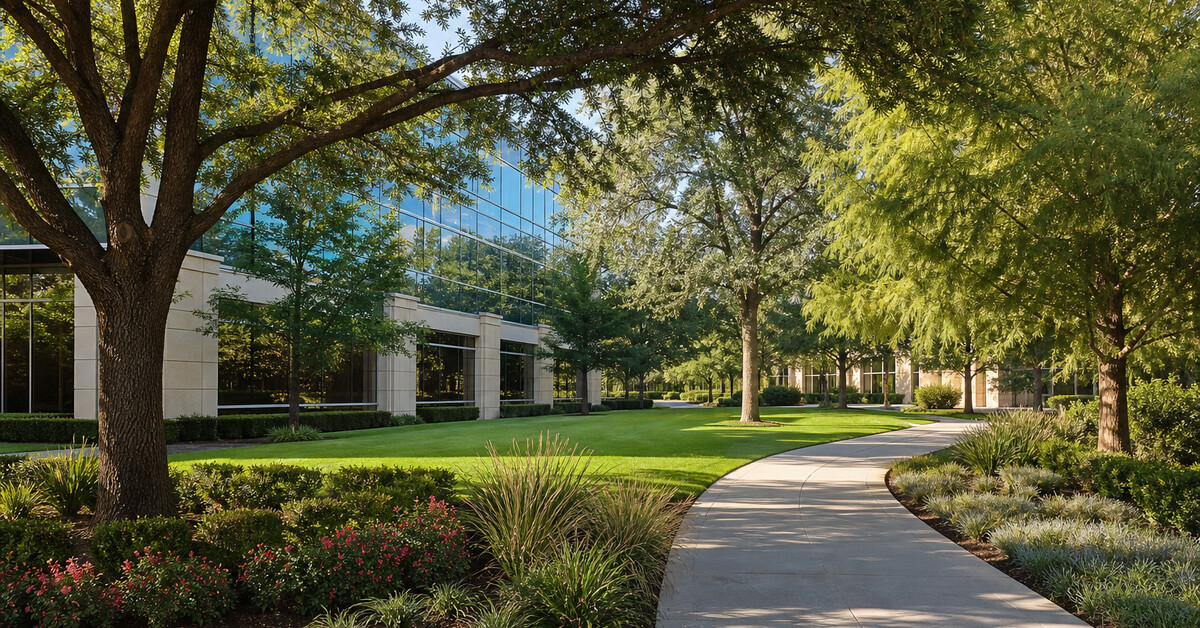
A mature tree can be one of the strongest visual assets on a commercial property. It can also create a complicated management question when branches cross a walk, roots lift an edge, irrigation keeps the trunk area wet, or a canopy changes after a storm. Waiting for a complaint is not a tree-care plan.
Commercial tree care starts with a repeatable property walk. The goal is not to diagnose every condition from the ground. It is to notice changes, document where they are, connect them to the people and property around them, and route the right issue to the right next step. For DFW owners and managers, late August is a useful time because summer stress and high-use patterns are visible before fall schedules fill up.
Treat the walk as screening, not a diagnosis
A checklist helps a manager create consistency across a campus, retail center, municipal site, church, or HOA common area. It does not replace a formal evaluation. If you see a recent lean, hanging branch, trunk split, storm damage, root disturbance, or another condition that concerns you, limit access to the affected area when appropriate and contact a qualified tree professional. Do not stand beneath a suspect branch to take a better photo.
Land Care’s commercial landscaping approach connects tree observations with the rest of the property. Mowing routes, irrigation, parking visibility, lighting, drainage, and bed work can all affect what the team sees and how follow-up should be scheduled.
Start with targets, not just trees
The same visible condition can carry a different priority depending on what is nearby. Begin the walk by mapping places where people and property concentrate:
- Primary entries and walks: doors, ramps, stairs, employee paths, and customer approaches.
- Parking and drives: vehicle lanes, loading areas, fire access, signs, and lighting.
- Amenity and gathering zones: benches, courtyards, playground edges, outdoor dining, and common areas.
- Buildings and utilities: roofs, facades, service lines, meters, and drainage structures.
- Low-use landscape areas: perimeter buffers, open space, detention edges, and back-of-house zones.
This is not a reason to ignore trees in low-use areas. It is a way to organize the order of review and the response. A mapped property lets a manager explain why one issue needs immediate escalation while another can be monitored and scheduled.
Use one route and the same viewing sequence
Walk the property in the same direction each time. Assign a tree number, building face, or landscape zone so photos and work orders can be matched later. View each tree from more than one side and from far enough away to see the entire canopy. Then move closer only when the area appears safe.
A consistent route also helps the commercial grounds maintenance team report changes between formal walks. Field observations become more useful when everyone refers to the same zones instead of “the tree by the back corner.”
Check the canopy for change and clearance
Look for branches that appear dead, broken, hanging, or newly out of balance. Note canopy sections with unusual thinning compared with the rest of the tree, but avoid naming the cause from appearance alone. Heat, root stress, irrigation, disease, pests, prior cuts, and storm movement can create overlapping symptoms.
Clearance is a separate question from tree health. Record branches that interfere with pedestrian routes, sightlines, signs, lighting, building surfaces, or routine property access. The objective for commercial tree trimming and pruning should be specific: improve a defined clearance, remove a confirmed dead branch, or develop structure. “Trim everything back” is not a useful scope.
Read the trunk from the ground without touching defects
From a safe position, note visible splits, cavities, loose bark, old wounds, seams, fungal growth, or a change in trunk angle. Some features are normal for a species or old injury; others deserve follow-up. The checklist should describe what is visible rather than declare a diagnosis.
Also look at previous pruning. Repeated stubs, torn cuts, or dense sprouts may affect the next recommendation. Avoid topping as a shortcut to reduce a canopy. Severe indiscriminate cuts can create weak regrowth and a maintenance cycle that does not serve the tree or the property.
Inspect the root zone as part of the landscape
Many commercial tree concerns begin below the canopy. Look for soil piled against the trunk, deep mulch at the flare, mower or string-trimmer injury, exposed or cut roots, trenching, recent paving, vehicle traffic, standing water, or a root zone that has become a storage area. Document recent construction even when the canopy still looks normal.
Irrigation patterns belong in the same review. A saturated area near one tree and dry turf around the next may point to coverage, drainage, or schedule differences. Pair tree notes with a zone-based commercial irrigation inspection instead of assuming every stressed canopy needs more water. The earlier Texas heat field guide offers a broader way to separate symptoms from causes across turf, beds, and trees.
Sort findings into four action lanes
- Restrict and escalate. Use this lane for a visible condition that may affect an occupied or critical area. Protect the area and seek qualified review.
- Schedule corrective work. Define the location, objective, access needs, and timing for approved pruning or other service.
- Diagnose before acting. Route uncertain canopy, trunk, soil, or water symptoms for a closer evaluation rather than guessing at treatment.
- Monitor with a date. Keep photos and set the next review. “Watch it” without an owner or date is not a management plan.
Some trees may need a health or soil-focused follow-up through plant and tree fertilization services. Others may need a removal discussion when retention no longer fits the property objective. Keep commercial tree removal as a documented decision, not an automatic response to every defect or maintenance concern.
Build a property record that survives turnover
For each item, record the tree or zone ID, date, broad species label if known, wide photo, detail photo, visible concern, nearby target, action lane, responsible person, and follow-up date. Add completed work and new observations to the same record instead of starting over each season.
That history helps property managers compare recommendations, plan access, and separate recurring maintenance from additional tree work. It also supports proactive communication with owners, boards, tenants, and site teams. After a major wind event or site construction, revisit the mapped priority zones and add new photos rather than relying on memory.
Share the ranked list with security, facilities, and tenant-facing teams before work begins. They may know when a path can close, which loading window must stay open, or where noise and access need extra coordination. A technically sound scope still needs an operating plan that fits the property.
Turn late-summer observations into a fall work plan
The useful outcome is not a long list of trees. It is a short, ranked plan: protect this area, evaluate these conditions, schedule these clearance objectives, correct these irrigation or root-zone conflicts, and revisit these monitored items on a named date. That is how commercial tree care becomes part of property management instead of a series of emergencies.
Need a documented tree and property review for a DFW commercial site? Request a commercial landscape review or call (972) 919-0054.
Commercial Tree Care FAQs
What should a commercial tree walk include?
Review each tree in relation to people, buildings, parking, drives, signs, lighting, and utilities. Document visible canopy, trunk, root-zone, soil, irrigation, and clearance concerns with a map and photos, then assign a follow-up owner and timing.
Is a property walk the same as a formal tree risk assessment?
No. A property walk is a screening and documentation step. Visible defects, recent changes, storm damage, or trees near important targets may require evaluation by an appropriately qualified tree professional. Do not treat a checklist as a diagnosis.
When should commercial trees be trimmed in DFW?
Timing depends on tree species, condition, objective, weather, and the type of cut. Use the late-summer walk to define clearance and health concerns, then schedule pruning based on the tree and recommendation rather than applying one calendar date to every species.
How should property managers document tree concerns?
Use a consistent tree or zone ID, wide and close photos, the date, the visible concern, nearby targets, and the next action. Keep completed work, monitoring notes, and future recommendations in the same property record so the history survives staff or vendor changes.
Put Every Tree on the Property Plan
We will organize visible concerns, property priorities, and next steps so tree care supports the whole site.