
HOA Landscaping: A DFW Fall Planning Guide
The best fall landscape work starts before the first leaf drops. This board-ready planning guide helps DFW communities turn an August property walk into clear priorities, approvals, and seasonal timing.
Published August 17, 2026 · Updated August 19, 2026 · Land Care Landscape Management
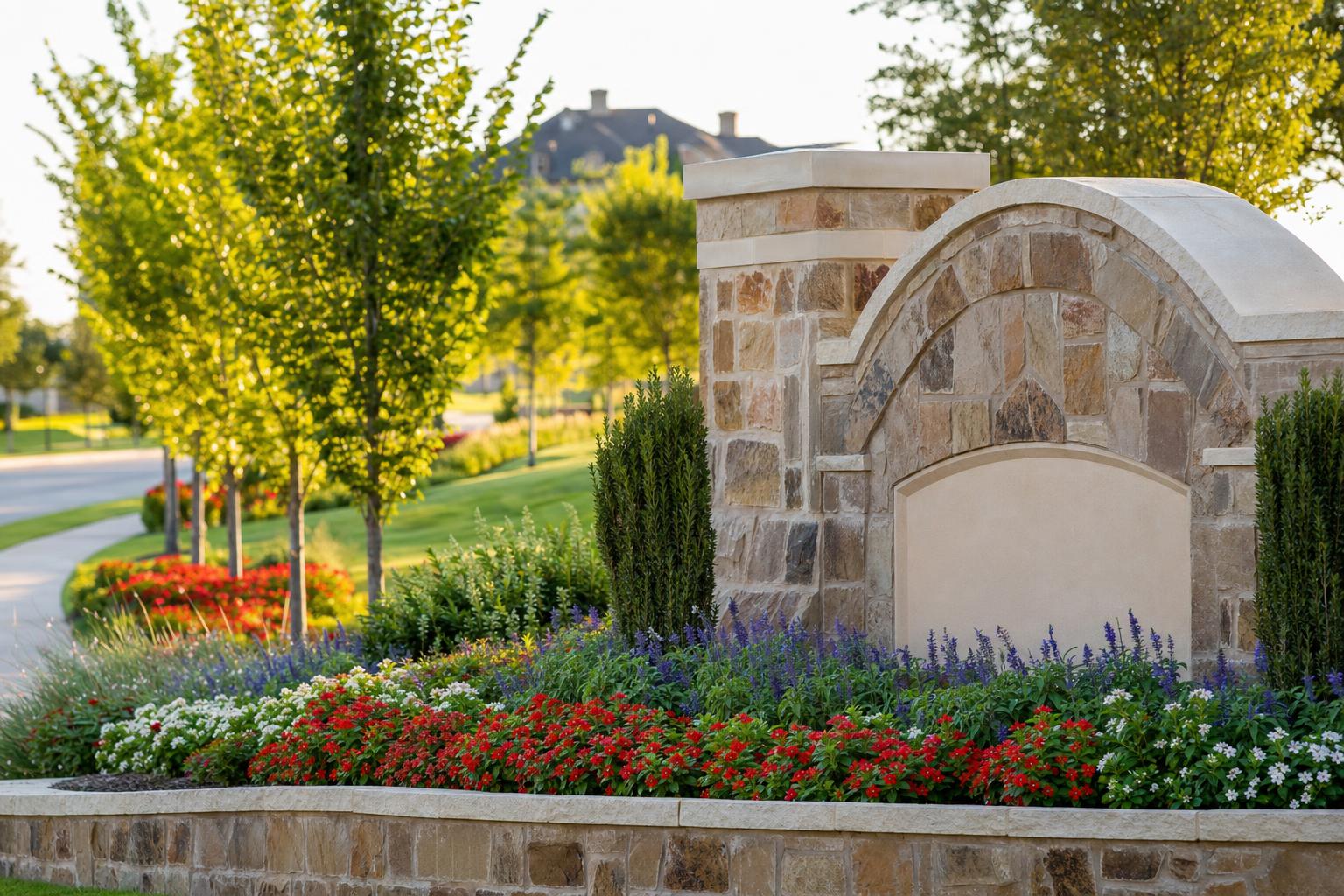
A fall landscape plan built in October is usually a reaction. Leaves are already collecting, summer-damaged beds are still visible, seasonal color decisions are late, and the board is trying to approve several unrelated items at once. A plan built in August gives the community time to inspect, decide, communicate, and schedule.
For DFW communities, good HOA landscaping is less about a single dramatic project and more about coordinated details across entrances, streets, amenities, open space, and resident-facing edges. The board needs to know what routine service covers, which enhancements need approval, and which decisions have a real timing window. This guide organizes that work into a board-ready process.
Start with the decisions the board actually needs to make
Before the walk, ask the community manager and landscape partner to agree on the purpose. Is the board setting fall priorities, reviewing contract performance, preparing next year’s budget, or all three? A broad “look at the landscaping” request produces a broad list. A defined agenda produces decisions.
Land Care’s HOA and community landscaping approach treats the manager, board, and field team as partners. The contractor brings site observations and practical sequencing. The manager brings resident history and operating context. The board sets standards and approvals. When those roles are clear, field crews are not asked to interpret policy at the curb.
Walk the community as five connected zones
A community may have dozens of pockets, but the board can organize them into five zones. Photograph the same views each season so changes are easier to compare.
- Entrances and monument areas. Review sign visibility, seasonal color, bed edges, lighting conflicts, irrigation coverage, and plant scale. These spaces carry the first impression and usually deserve the clearest appearance standard.
- Amenities and gathering spaces. Inspect pool approaches, playground edges, clubhouses, mail areas, seating, and paths for clearance, litter, runoff, and sightlines.
- Street and curb corridors. Note tree clearance, thinning turf, weeds, damaged edging, blocked irrigation, and repeated vehicle or foot-traffic impacts.
- Open space and drainage areas. Separate manicured expectations from functional areas. Record erosion, standing water, access issues, and places where a design correction may be more useful than another cleanup.
- Homeowner transition points. Mark exactly where HOA-maintained space ends and individual responsibility begins. The governing documents control that boundary; the landscape map should make it understandable in the field.
The result is a common-area inventory, not a complaint list. It lets the board see whether a concern is isolated, repeated across one zone type, or connected to the existing commercial grounds maintenance plan.
Put fall work on one visible calendar
North Texas fall does not arrive on one day. Build a calendar that connects decisions to conditions and crew sequencing rather than promising a rigid response to the date alone.
| Planning window | Board and management focus | Field focus |
|---|---|---|
| August | Walk the property, rank summer damage, confirm responsibilities, identify approvals | Document turf, trees, beds, irrigation, and high-visibility concerns |
| Early fall | Approve color, cleanup expectations, and targeted enhancements | Complete corrective work in the right sequence and prepare focal beds |
| Leaf season | Communicate service rhythm and resident expectations | Prioritize entrances, drains, walks, and accumulation zones as leaves fall |
| Winter readiness | Review open items and next-year recommendations | Adjust irrigation for conditions and verify exposed property risks |
This calendar should identify who approves each item and how residents will be notified when work affects access or appearance. A date without an owner is not a schedule.
Separate recurring service from enhancement work
Many HOA frustrations begin with two different scopes being discussed as if they are one. Recurring maintenance keeps the agreed standard through scheduled visits. An enhancement changes the property: replacing a failing bed, adding plants, improving drainage, renovating turf, or redesigning a monument area.
The fall plan should use two columns. In the first, list what belongs to the existing service rhythm. In the second, list added work that needs a defined scope and approval. That distinction keeps the board from assuming a renovation is included in routine care, and it keeps the contractor accountable for work that is included.
If the current relationship cannot produce a clear service map, report, or ownership path, our guide to switching landscape contractors outlines how to compare standards without creating a rushed transition.
Plan seasonal color around visibility and care
Seasonal color should support the community’s identity, not scatter small pockets everywhere. Rank entrances and amenities by visibility, irrigation reliability, sun exposure, and the amount of care the bed can receive. A focused plan for annual flowers and seasonal color usually reads more intentionally than spreading the same budget across every corner.
Ask for a simple layout or quantity plan for major focal beds. Confirm preparation, removal of tired material, bed edges, soil condition, irrigation coverage, and the maintenance expectation after installation. Plant selection comes after the site questions, not before them. Retail plant purchases remain the Garden Center’s lane; landscape planning, installation, and maintenance stay with Land Care Landscape Management.
Define what “leaf cleanup” means before leaves fall
A community with mature canopy needs priorities, not a promise that every leaf will disappear the moment it lands. Identify entrances, sidewalks, drains, pool areas, and high-traffic turf that need the closest rhythm. Then define how accumulation in open space or low-traffic areas will be handled.
The fall cleanup and leaf removal scope should explain service areas, expected sequencing, and how weather or a heavy drop changes the plan. Residents respond better when management communicates the rhythm before the first large accumulation.
Carry summer findings into trees, turf, and irrigation
August is the right time to record which problems repeated through summer. A tree that continues dropping limbs near a path needs a different response than a shrub that simply looks tired at midday. Route clearance and health concerns through a documented tree trimming and pruning review instead of folding them into a generic cleanup request.
For turf, map thinning, traffic wear, shade, drainage, and irrigation patterns before recommending recovery work. For irrigation, note overspray, dry arcs, leaks, and controller concerns by zone. A formal irrigation inspection can turn those notes into prioritized repairs and schedule adjustments. The goal is to correct the cause before the board approves replacement material.
Give the board a one-page approval sheet
Long reports are useful as backup, but the decision page should be short. For each item, show the location, current condition, recommended action, reason, timing window, responsibility, and approval status. Add a labeled photo and map reference. Group items as routine, corrective, enhancement, or monitor.
That one page gives the community manager a clean agenda and gives the landscape partner a clear work queue after the meeting. It also protects continuity when board members change. The next group can see what was observed, what was approved, and what was intentionally deferred.
Enter fall with a shared property standard
A strong HOA plan connects appearance, timing, communication, and accountability. Entrances have a defined standard. Leaf priorities are understood. Summer damage has a next step. Enhancements are separated from recurring care. Every approval has an owner. That is how a community moves from seasonal reaction to long-term property care.
Ready to turn your August walk into a board-ready fall plan? Request an HOA landscape review or call (972) 919-0054.
HOA Fall Planning FAQs
What should an HOA fall landscaping plan include?
A useful plan identifies common-area priorities, seasonal color decisions, leaf and cleanup expectations, tree concerns, turf recovery needs, irrigation changes, enhancement scopes, approval owners, and target dates. It should separate recurring contract work from additional projects.
When should a DFW HOA begin planning fall landscaping?
Begin the property walk and board discussion in August so the community can document summer damage, decide on visible fall priorities, and approve time-sensitive work before crews and materials are committed elsewhere.
How can an HOA board compare landscaping proposals?
Give each contractor the same property map, service expectations, reporting standard, and list of enhancements. Compare scope, frequency, exclusions, communication, documentation, and accountability rather than relying on a single total or a general promise to maintain the grounds.
Who handles HOA common areas versus individual lots?
The governing documents and maintenance agreement define responsibility. The landscape plan should map HOA-maintained areas clearly, identify homeowner transition points, and route questions through the community manager or board instead of asking field crews to interpret policy on site.
Plan Fall Before It Arrives
We will walk the community, organize the priorities, and give your board a clear path from observation to approval.