
Commercial Seasonal Color Planning in DFW
Plan DFW commercial seasonal color around high-value views, plant performance, irrigation, maintenance, and coordinated changeouts.
Published September 2, 2026 · Land Care Landscape Management
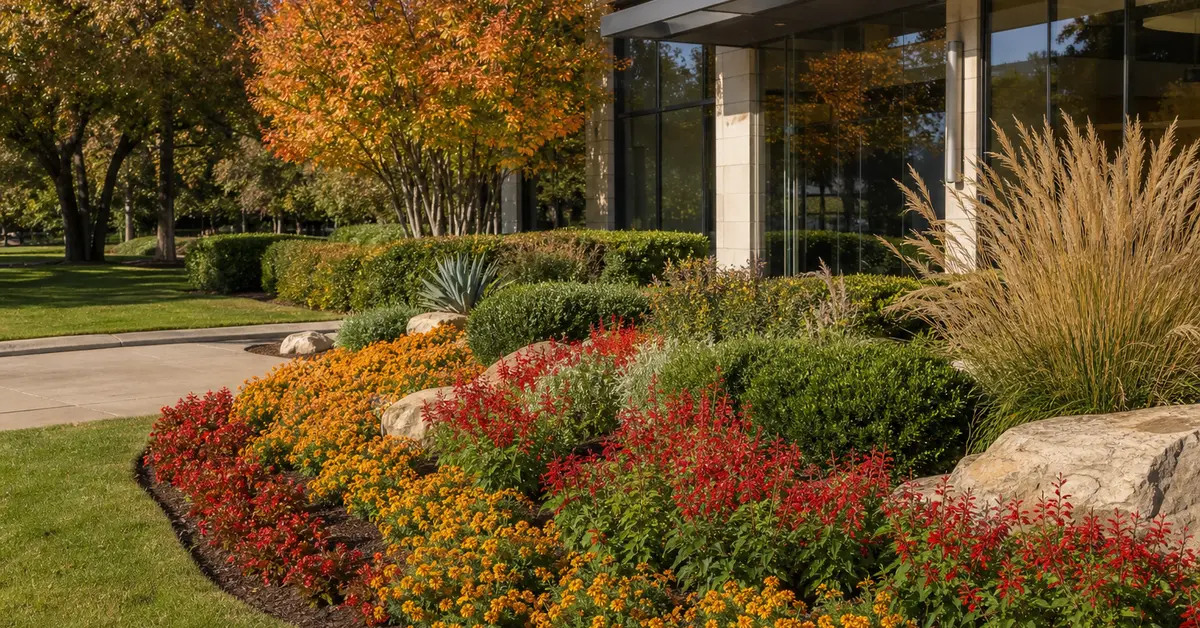
Define Where Color Has the Most Business Value
Commercial seasonal color can direct attention, reinforce a maintained appearance, and make key entrances easier to recognize. It is most effective when it is planned as part of property operations rather than purchased as a tray-by-tray decoration. For DFW properties, the plan needs to account for intense sun, reflected heat, irrigation coverage, pedestrian traffic, and the maintenance standard expected by tenants, residents, customers, or visitors.
Prioritize High-Value Views
Start by ranking views. The main monument sign, primary vehicle entrance, leasing office, clubhouse, and pedestrian arrival may not deserve equal treatment. Concentrating color at the most important moments often creates a stronger impression than scattering small patches across the entire site. This priority map also helps property managers discuss budget without reducing the decision to plant quantity alone. Each bed should have a clear role in the arrival sequence. See Texas A&M AgriLife seasonal color guidance for authoritative planning context.
Design Beds for Distance and Movement
Commercial beds are often viewed from a moving vehicle or across a parking lot. Large, readable masses usually perform better than a complicated mixture of isolated colors. Repeat shapes and palettes so separate beds feel connected. At pedestrian areas, more texture and detail can work because people experience the planting at a slower pace. The design should respond to viewing distance, traffic direction, building scale, and the amount of time someone spends near the bed. Learn more about commercial grounds maintenance.
Choose Plants for the Actual Exposure
Plant selection should follow light, heat, wind, soil, and irrigation conditions. A bed near reflective glass or pavement can experience more heat than another bed on the same property. Deep shade beneath mature trees creates a different challenge, especially where roots compete for moisture. Texas A&M AgriLife seasonal color guidance emphasizes site preparation, plant selection, fertilization, watering, and maintenance as connected parts of performance. Appearance begins with matching plants to conditions. Learn more about annual flowers and seasonal color.
Coordinate Color With the Property
Color can support the architecture and brand environment without trying to copy every logo color. A limited palette often looks more intentional and is easier to maintain consistently. Consider flower color, foliage, mulch or stone, building materials, and the surrounding evergreen structure. Seasonal beds should fit the landscape when viewed as a whole. If shrubs have outgrown their space or edging is unclear, new flowers alone will not make the area feel fully renewed. Learn more about commercial landscaping.
Plan Irrigation Before Each Changeout
Irrigation coverage should be inspected before plants are installed. Spray blocked by mature shrubs, damaged emitters, mixed plant needs, or runoff across pavement can undermine the new display. An irrigation inspection creates an opportunity to correct obvious coverage or repair issues before the changeout is complete. Watering then needs to support establishment without keeping beds saturated. Weather-based adjustments matter because a fixed schedule does not respond to rainfall or seasonal temperature shifts. Learn more about irrigation inspections.
Set a Maintenance Standard
A seasonal color program needs a defined maintenance standard. That may include monitoring moisture, removing spent blooms when appropriate, replacing failed plants, controlling weeds, refreshing edges, and keeping mulch or soil off adjacent pavement. The frequency should match the visibility and expectations of the property. Clear responsibilities help a property manager know what the contract includes and help crews evaluate beds consistently instead of reacting only after appearance has noticeably declined. Learn more about landscape bed weed control. Additional context is available from Texas A&M AgriLife Texas Urban Landscape Guide.
Use Changeouts as Inspection Points
Changeouts are useful inspection points. Once old seasonal material is removed, the team can see compacted soil, drainage problems, irrigation coverage, edging damage, and encroaching roots more clearly. Addressing those conditions before the next planting supports a better finished result. It also helps distinguish an isolated plant issue from a recurring site problem. Documenting conditions across seasons gives the property manager a practical record for future planning and budget discussions. Learn more about commercial service requests.
Balance Impact With Water and Labor
Impact does not require covering every open area. A focused layout can reduce plant quantities and maintenance while preserving strong focal points. Grouping plants by similar needs can make watering more manageable. The Texas Urban Landscape Guide from Texas A&M AgriLife provides broader science-based guidance for WaterWise design, installation, and maintenance. Commercial planning can use those principles without sacrificing a polished presentation or the seasonal identity the property wants.
Build a Repeatable Property Program
A repeatable program connects the priority map, approved palette, irrigation review, installation window, and maintenance standard. Keeping those decisions together helps managers compare seasons, approve changes earlier, and communicate expectations across multiple properties without redesigning the process from scratch each time.
Create a Bed-by-Bed Scope
List every seasonal bed with its square footage, visibility tier, sun exposure, irrigation type, and current condition. Note whether it sits beside a sign, entrance, patio, or traffic aisle. This inventory makes proposals easier to compare because plant quantities and maintenance expectations have a physical location. It also helps teams avoid overlooking a small but important arrival bed while investing too heavily in a low-value area behind the building. Record sightlines from each driveway direction because a planting may read very differently on entry and exit across the entire property portfolio.
Set Approval Dates Before the Season
Commercial changeouts depend on plant availability, weather, property events, and management approvals. Set dates for palette review, proposal approval, removal, bed preparation, installation, and the first condition check. Identify any blackout dates around tenant events or high-traffic periods. Early decisions do not guarantee weather, but they reduce rushed substitutions and give the landscape team clearer direction when seasonal material begins arriving from growers.
Report Conditions, Not Just Completion
A useful service report can note installation completion, irrigation observations, plant replacements, weed pressure, drainage concerns, and any bed that is performing differently from the rest. Photos from consistent viewpoints make seasonal comparisons easier. Property managers can then see whether a recurring issue is tied to one microclimate or to a broader system. This operational record supports decisions for the next changeout and keeps presentation standards specific rather than subjective.
Plan the Next Step
Land Care Landscape Management provides commercial grounds maintenance, seasonal color, irrigation, and related landscape services across its DFW service area. A coordinated program can set the palette, priority beds, changeout windows, irrigation checks, and maintenance expectations before each season. That structure gives property managers a clearer scope and a more consistent result. The finished planting then supports the entire property instead of functioning as a temporary decoration at the curb.
Ready to discuss the property? request commercial service and share the goals, site conditions, and timing you have in mind.
Frequently Asked Questions
How often should commercial seasonal color be changed?
Timing depends on the palette, weather, property standard, and contract. Plan changeout windows before each season.
Where should a property concentrate seasonal color?
Prioritize monument signs, main entrances, leasing or clubhouse entries, and other high-value arrival views.
Should irrigation be checked before a changeout?
Yes. Coverage and obvious repair issues should be identified before new plants are installed.
Can fewer plants still create strong impact?
Yes. Focused masses in priority beds can read more clearly than small patches scattered across a property.
Plan Seasonal Color Around Your Property
Coordinate priority views, irrigation, changeout timing, and maintenance in one commercial landscape plan.