
Commercial Leaf Removal in North Texas: How Often?
Leaf drop in North Texas starts in late October and can run into December. Here is a starting schedule for commercial leaf removal and what each fall visit should cover.
Published November 4, 2026 · Land Care Landscape Management
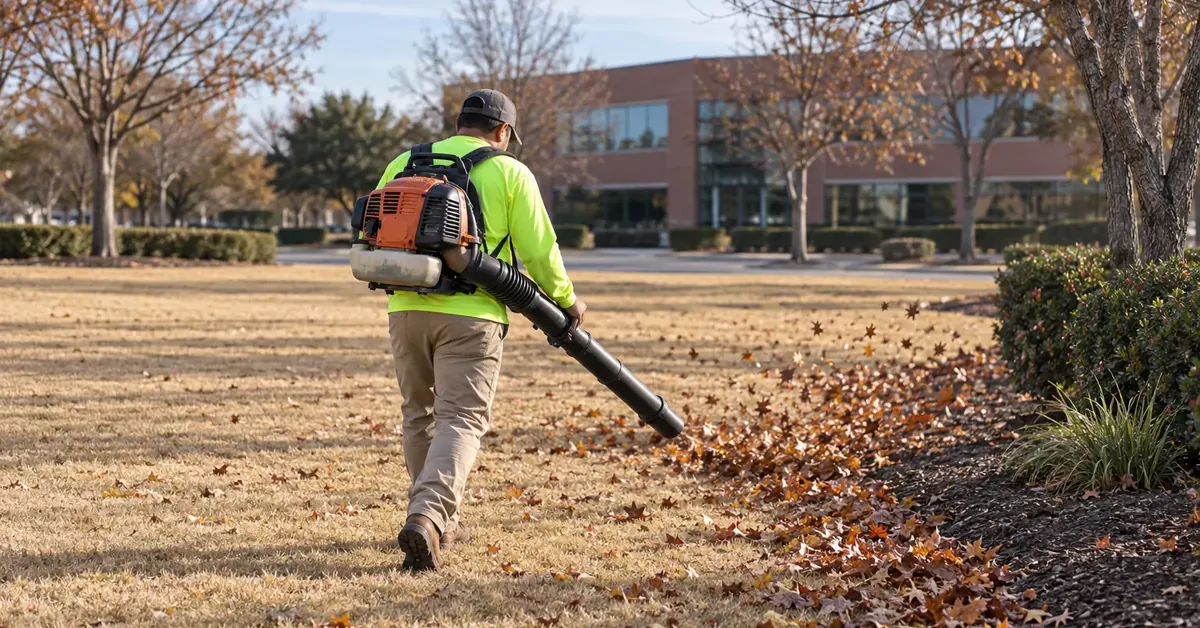
A reasonable starting point for many commercial properties in North Texas is leaf removal every two to three weeks from late October through early December, with visits closer together during the November peak. Tree species, canopy density, weather and site conditions can change that. Each visit should clear turf, beds, hardscape and drains.
When does leaf drop peak in North Texas, and why does it run into December?
North Texas trees do not drop all at once. Cottonwoods, Bradford pears and some elms start letting go in late October. Pecans, cedar elms, red oaks and most ornamental trees follow in November, and a hard freeze can bring down a lot of what is left in a few days.
That is why the season stretches into early December. Mild fall weather keeps leaves on the branches longer, then a cold front drops them quickly. A property that looked clean on Friday can be covered again by Monday.
Live oaks and other evergreens are a different case. Live oaks shed mostly in late winter and early spring, so they do not follow the fall pattern. Sites with a mix of species often need cleanup attention at more than one time of year.
How often should a commercial property schedule leaf removal visits?
A workable starting point for many commercial sites is a visit every two to three weeks from late October through early December. That usually means three to four visits, with the closest spacing during the November peak. Sites with heavy mature canopy or high-visibility entrances may need a visit every week or so while the trees are dropping, and lighter sites may need fewer.
Three things should drive the schedule:
- Canopy density. A campus lined with mature pecans or oaks collects far more than a retail strip with young trees.
- Public exposure. Main entries, storefronts, walkways and parking get judged first, so they may need more frequent attention than back-of-property areas.
- Drainage and wind. Leaves collect against curbs, in corners, along fences and around inlets. Those spots need checking even when the open areas look fine.
A single large cleanup in December is a common shortcut, and it can cause problems. By then leaves may have been matting turf, packing into beds and sitting over drains for weeks. Regular passes during the season keep the property presentable and protect what is underneath. Our fall cleanups and leaf removal service is part of landscape maintenance, so it can be planned alongside the rest of the property's seasonal work.
What should each fall visit cover beyond blowing leaves?
Blowing leaves into a pile is the easy part. A complete visit works through the whole property in a set order:
- Hardscape first. Clear sidewalks, entries, loading areas, parking lots and curb lines so leaves are not blown back onto finished areas.
- Beds. Remove heavy leaf buildup from planting beds and rock beds, where wet mats can hold moisture against plant crowns and hide weeds.
- Turf. Clear the open turf, especially cool-season grass and shaded areas where a thick layer blocks light.
- Drains and inlets. Clear grates, swales, trench drains and the low corners where runoff leaves the site.
- Removal. Haul the material off site or mulch it on site, depending on the volume and the scope.
- Final walk. Check edges, fence lines, building corners and the areas behind planters, where leaves hide.
Fall is also a good time to catch other items while the crew is on site: weeds coming up in beds, mulch that has thinned, and tree limbs that need attention. Property mowing continues through the season on turf that is still growing, and it helps to coordinate it with the leaf visits so one does not undo the other.
What happens when leaves are left in place?
It depends on how many leaves there are and where they land. A light, scattered layer on turf or in a bed is usually harmless and can break down into the soil. Heavy mats and buildups on walking surfaces or over drains are the real concern, and they tend to get worse as the season goes on.
- Turf. A thick leaf layer blocks light and traps moisture. Cool-season turf can thin out or develop disease. Dormant bermudagrass is more forgiving, but heavy mats still hold moisture and can leave weak spots in spring.
- Beds. Packed leaves can hold water against plants and shelter weeds that sprout early. Spring cleanup is much harder when beds start the year buried.
- Drains. Leaves wash into grates and inlets with the first heavy rain and can cause ponding in parking lots and along curbs. North Texas can get strong fall storms, so clogged drains are a real concern.
- Safety. Wet leaves on walkways, ramps and parking surfaces are slippery. Buildup in drive lanes and at entrances can create problems for visitors and tenants. A property manager should treat that as a liability issue, not just a looks issue.
Mulching or hauling away: which fits a commercial site?
Both approaches work, and many sites use both. The right mix depends on the volume of leaves, the turf type and how the property needs to look.
- Mulch into turf. Suited to a light to moderate drop on open lawn. When the leaves are dry and shredded into small pieces, a thin layer returns organic matter to the turf.
- Haul away. Suited to heavy canopy, thick buildup in beds, and areas near parking and drains. It gives the cleanest finish and fully clears the turf.
- Combination. Suited to mixed sites with open turf and heavy beds. Mulch where the layer is thin, and remove material where it is heavy.
In planting beds, a thin layer of shredded leaves can act as mulch. Excess leaves that smother plants or sit against crowns should come out. Pavement and drains simply need to stay clear, and what happens to the collected material afterward can be hauling, mulching or on-site composting, depending on volume and the site.
If leaves are piled so deep that the mower cannot shred them into small pieces, they should come off the turf instead of being mulched in.
Disposal rules for yard waste and leaves vary by city and by county, so check with your city or your waste hauler if you plan to handle disposal yourself.
What should a property manager put in the fall cleanup scope?
A clear written scope prevents most disputes. Include these points:
- The number of visits and the target window, such as late October through early December, with room to add visits after a freeze.
- The areas covered: turf, beds, rock beds, parking, walks, drains and detention or swale areas.
- Whether leaves are mulched, hauled off, or both, and who is responsible for disposal.
- How the visits fit with property mowing, mulch installations, bed weed control and any irrigation inspection.
- How extra visits are requested or approved if a storm or freeze changes the timing.
If you are planning a fall scope for a commercial property, an HOA or a municipal site, we are glad to walk it and talk through what makes sense. You can reach us through our contact page.
Frequently Asked Questions
Can leaves be mulched into turf instead of hauled off?
Yes, when the layer is light and the leaves are dry enough to be shredded into small pieces. Heavy, wet or matted leaves should come off the turf. In beds, a thin layer of shredded leaves can work as mulch, but thick buildup against plant crowns should be cleared, and pavement and drains should be kept clear. Whether the collected material is hauled, mulched or composted depends on the volume and the site.
Do evergreen trees and live oaks change the cleanup schedule?
They can. Live oaks drop most of their leaves in late winter and early spring, not in the main fall window, so a site with many of them may need extra cleanup visits at that time. Pines and other evergreens shed needles and debris through the year.
Should leaf removal happen before or after the final property mowing of the season?
Usually both, in sequence. Clear heavy leaves first so the mower does not push clumps across the turf, then do a final cleanup pass after the last mow to pick up clippings and late leaf fall. Dormant turf may not need a final mow at all, but the leaf visits should continue.
How do leaves in parking lots and drains create liability?
Wet leaves are slippery on walkways and paved surfaces, and clogged drains can cause standing water in lots and along curbs. Both can create hazards for visitors and tenants. Regular visits that clear walkways and inlets reduce the risk, and your own insurance or legal adviser can speak to specifics.
Can leaf removal be bundled into an existing maintenance scope?
It is reasonable to ask. Fall cleanups and leaf removal fall under landscape maintenance, so they can be planned alongside property mowing, bed weed control and mulch work. Ask for the number of visits, covered areas and disposal method to be written into the scope.
Plan the Next Step For Your Property
Ask for a site walk to scope the work and timing that fit your property.